
Welcome to the Aware and Prepared podcast

where I, Mandi, a trained domestic violence victim advocate helps those feeling vulnerable learn emotional self defense and how to be street smart.


Choose which platform you’d like to listen and follow the show:

You deserve to live in peace and safety! Hear safety tips that will help us enjoy empowered lives. Let’s leave worry behind so we can be savvy, aware, and prepared

Depression as a Trauma Response: How to Support Yourself & Others (Part 2)

Depression as a Trauma Response: How to Support Yourself & Others (Part 2)

Depression as a Trauma Response: How to Support Yourself & Others (Part 2)Mandi Pratt
Published on: 11/02/2026

In this continuation episode, forensic psychologist Ashley Wasserburger explores the depressive face of trauma, the final of four trauma responses discussed in this series. Ashley breaks down how depression manifests as a trauma response, addressing common misconceptions like viewing depressed individuals as lazy or unreliable. She explains how overwhelming daily tasks become, why people isolate despite craving connection, and the masks they wear to avoid feeling like a burden. The conversation covers practical support strategies including breaking tasks into manageable steps, celebrating small victories, and providing tangible help without judgment. The conversation touches on cognitive distortions, the five Cs for addressing intrusive thoughts (catch, control, challenge, change, cherish), and the importance of reframing negative self-talk with curiosity rather than forced positivity. Ashley emphasizes that trauma responses are normal adaptations, NOT character flaws, and discusses how our brains physically change to help us survive, requiring patience and self-compassion as we learn to feel safe in healthy environments.

Podcast
Trauma Responses Explained: Understanding Perfectionism, People-Pleasing and Anger

Trauma Responses Explained: Understanding Perfectionism, People-Pleasing and Anger

Trauma Responses Explained: Understanding Perfectionism, People-Pleasing and AngerMandi Pratt
Published on: 28/01/2026

Mandi and Forensic Psychologist, Ashley Wasserburger, explain how behaviors like perfectionism, anger, and people-pleasing are often trauma responses, not personality flaws. They break down the different “faces of trauma” and share why curiosity, patience, and safety matter more than judgment. This conversation helps normalize trauma adaptations and reminds listeners that healing begins when people feel safe, supported, and empowered with choice. Subscribe to the show so you hear Part 2 next week!

Podcast
When Relaxing Feels Impossible: Healing from Complex PTSD

When Relaxing Feels Impossible: Healing from Complex PTSD

When Relaxing Feels Impossible: Healing from Complex PTSDMandi Pratt
Published on: 15/10/2025

Ever find it hard to relax like your body doesn’t know how to come down from survival mode? You’re not alone! In this solo episode, I’m wrapping up our Complex PTSD Series by sharing some additional final thoughts on what trauma has looked like in my own life, including: - How trauma may contribute to early menopause - Difficulty processing emotions - The inability to relax - Reflections on hypervigilance, numbness, and learning self-compassion Hear practical ways to start reconnecting with your body and emotions safely. You are not alone! Healing, peace, and self-trust are absolutely possible.

Podcast
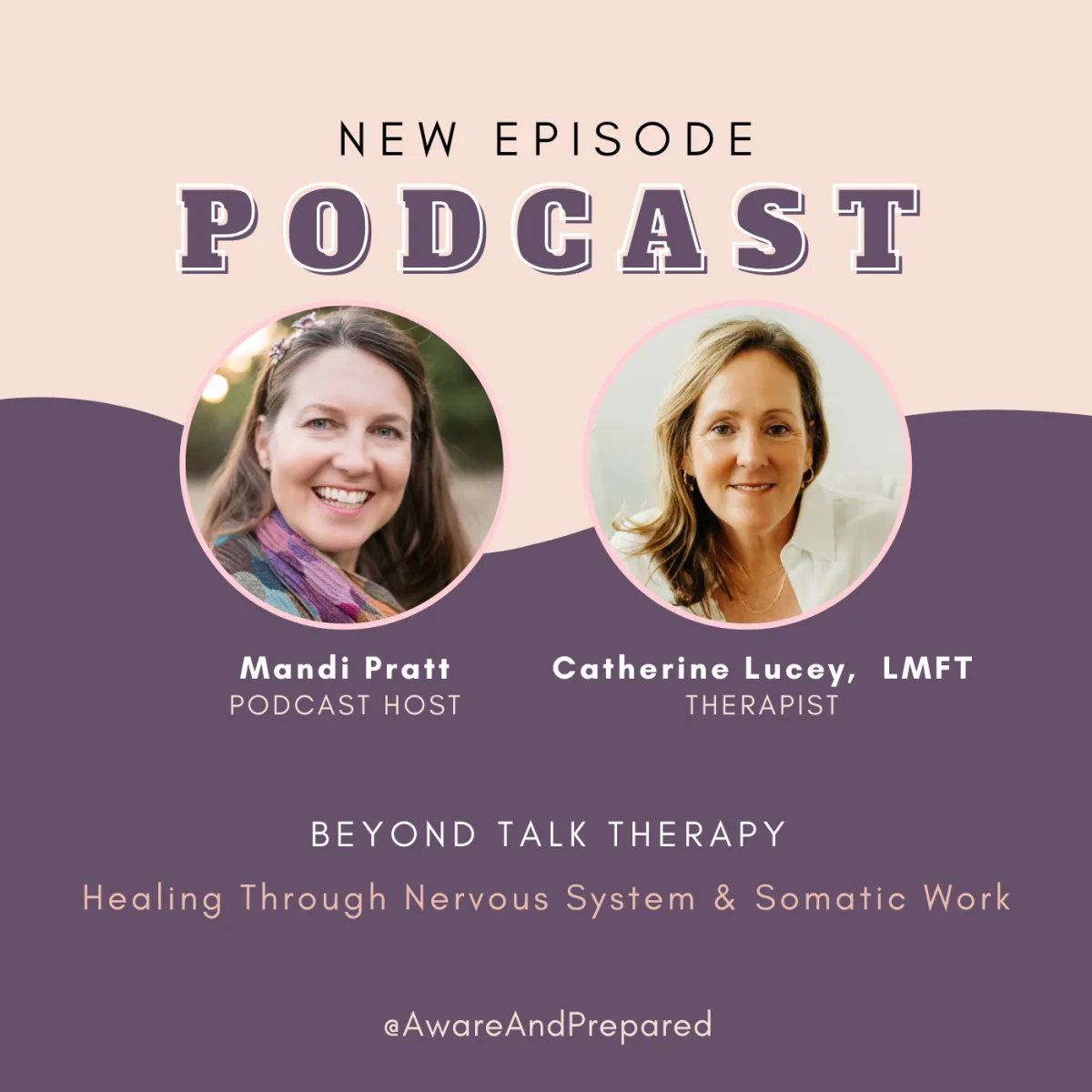
Beyond Talk Therapy: Healing Through the Nervous System and Somatic Work

Beyond Talk Therapy: Healing Through the Nervous System and Somatic Work

Beyond Talk Therapy: Healing Through the Nervous System and Somatic WorkMandi Pratt
Published on: 08/10/2025

What if you’ve tried talk therapy for years but still feel stuck? Listen in as therapist, Catherine Lucey, LMFT, and host Mandi Pratt unpack the healing practices that go beyond talk therapy — bringing the body, self-compassion, and community into the process. You’ll learn: The three lenses of healing: nervous system regulation, self-compassion (through Internal Family Systems), and community. A simple interrupt + orient + safety practice you can use daily to calm your body in minutes. How movement, nature, creativity, and even surfing can help regulate the nervous system. What questions to ask when seeking a trauma-informed, body-based therapist. Whether you’ve experienced trauma yourself, or you support others on their healing journey, this episode is filled with practical tools and gentle reminders: you are not broken, and healing doesn’t have to be another overwhelming “to-do.”

Podcast